
VISUALIZING TRANSGENDER NARRATIVES THROUGH ORAL HISTORY AND DESIGN
2025
Photoshop, Illustrator, InDesign, Risograph, Photography, Embroidery, & Crochet
The goal of this project is to gain a trans feminist oral history (Hill 2007) perspective on the lived experiences of transgender (more specifically gender non-conforming) individuals and the emotions they feel. I explore how to visualize and materialize individual experiences that “also connect to collective experiences, one story becoming the story of many” (Hill 2007, p4). The presentation of transgender experiences is explored through book design. My question, therefore, is, how can book design highlight commonalities within the broader transgender community and link disparate individuals through shared experience? This topic has been addressed by interviewing three gender non-conforming individuals using a trans feminist oral history methodology (Hill 2007). This project aims to meld art and design in order to express the collective experiences that are shared throughout the trans community.
Key Words: Community, transgender, shared experience, trans kinship, transgender gaze, oral history, feminism, book design
Introduction
This thesis was born out of the desire to represent trans kinship and highlight commonalities amongst the transgender (TG) community when discussing lived experience. The transgender community makes up 0.33% of the population in Canada according to the 2021 Canadian census (Statistics Canada 2022, para. 10), and just under 1 in every 100 people ages 20-24 identify as trans or non-binary (0.85%) (Statistics Canada 2022, para. 14). Despite the very small percentage of individuals in Canada who identify as transgender, this population is still the target of major attacks, “more likely to have experienced violence since age 15, and also more likely to experience inappropriate behaviours in public, online and at work than cisgender Canadians” (Statistics Canada 2020, para. 7). Nonetheless, those in the trans community have found kinship in the shared experiences they endure, both positive and negative, allowing for the community to blossom and demonstrate strength in numbers.
This thesis project explores the lived experiences of transgender individuals in Canada and represents these experiences through book design, with the goal of highlighting commonalities in a way that brings the transgender community together. This topic is not only deeply personal, it also provides an opportunity to demonstrate the transgender gaze by designing this project for trans people instead of designing for cisgendered people as a way to help them understand. In a piece written by Hazel Lu for Columbia University's undergraduate journal, The Gadfly, Lu (2023) argues that the transgender gaze is “the view of the world produced when people engage willfully in the eccentric relationships and networks built by transness and queerness. In this sense, the ability to see the world as a realm of possibilities for the creation of queer-being-in-the-world is radically different from the capabilities of cissexist and heterosexist institutions.” (para. 21). My project is not designed to promote the humanization of transgender people as a way to evoke empathy from cisgender people. Instead, this project is about the trans experience between mind, body, and perspective. Lu (2023) identifies trans kinship as a necessary component to the transgender gaze (para. 22), and throughout this thesis, I will cite contributions that support this statement.
Design and activism have long been linked to one another. Kenneth FitzGerald, a writer, artist, educator, and curator (FitzGerald 2010), states, “Here is the true ‘mother’ of graphic design, residing out in the open, readily identifiable. Graphic design as we know it was initiated and nurtured as activism: progressive, political speech.” (FitzGerald 2023, para. 16). Design as a means to convey a message through type, form, and image has been used by political activists for decades, especially amongst groups of marginalized and historically underrepresented groups. There has been work done within the design discipline to encourage a "designing with" rather than a "designing for" (Guffey 2023). Taking this framework, primarily emerging from disability studies and design, I see it as valuable to a number of different marginalized communities, including the trans community. As an openly transgender and non-binary designer myself, I have witnessed first hand how trans kinship provides comfort in shared experiences. The narratives that are highlighted throughout the three books presented in this thesis can facilitate trans kinship through narrative and materiality. The book form is also an excellent representation of the body, with the cover acting as the metaphorical exterior shell, what a person chooses to present to the world, and the interior or “guts” of the book as a person's experiences, thoughts, and feelings that makes them who they are.
The questions that drive this project include:
Are there individual experiences common within the trans community collective?;
How can personal narratives translate into book narratives?;
Which elements of the book form lend themselves to exploration when representing lived experience?
These questions were taken into consideration at every step of this project, grounding the work, though were often secondary to my main research question: How can book design highlight commonalities within the broader transgender community and link disparate individuals through shared experience?
By opening up conversations about transgender lived experiences, community bonding, and trans kinship, my goal is to answer this question by exploring these narratives through the book form.
My Body & Other Parties
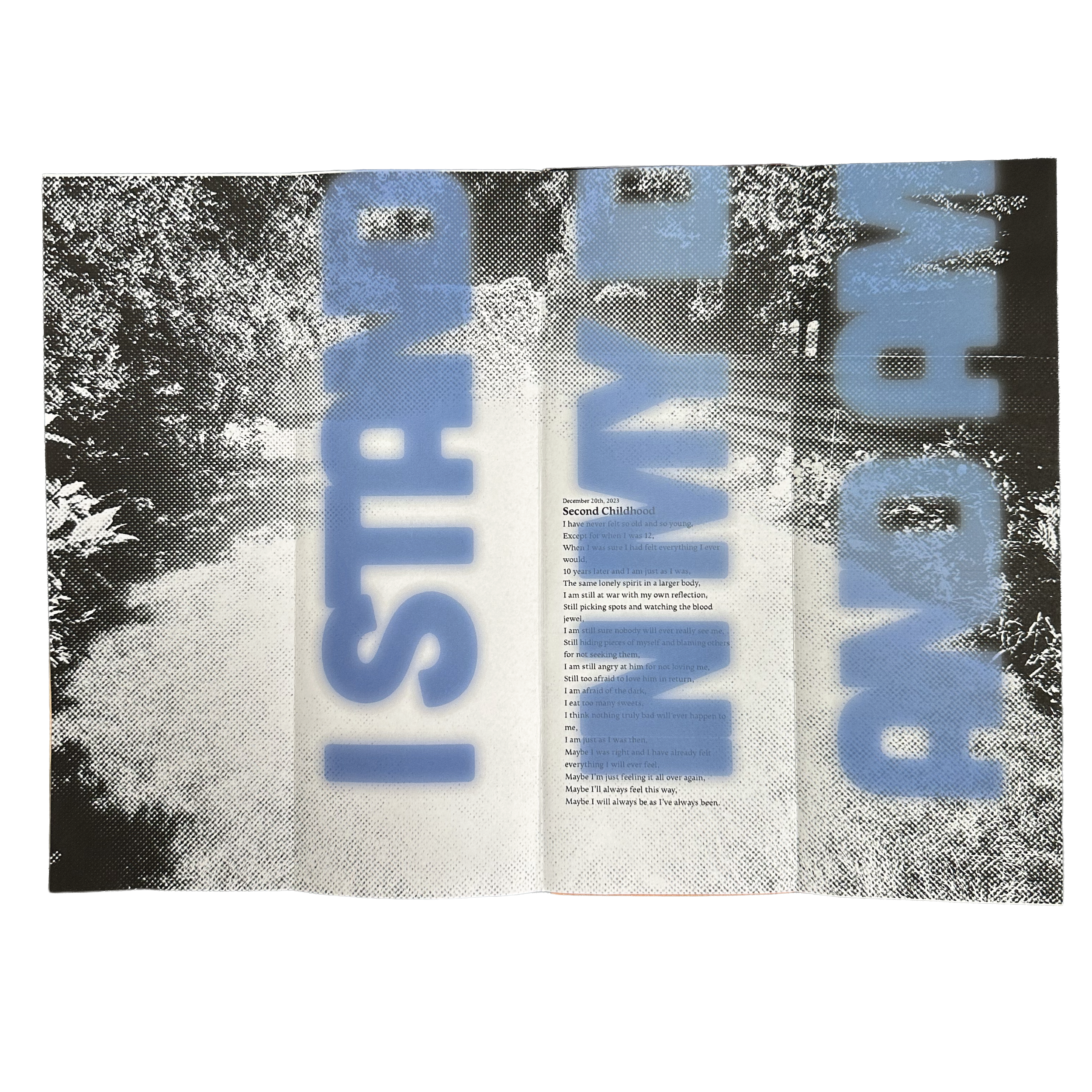
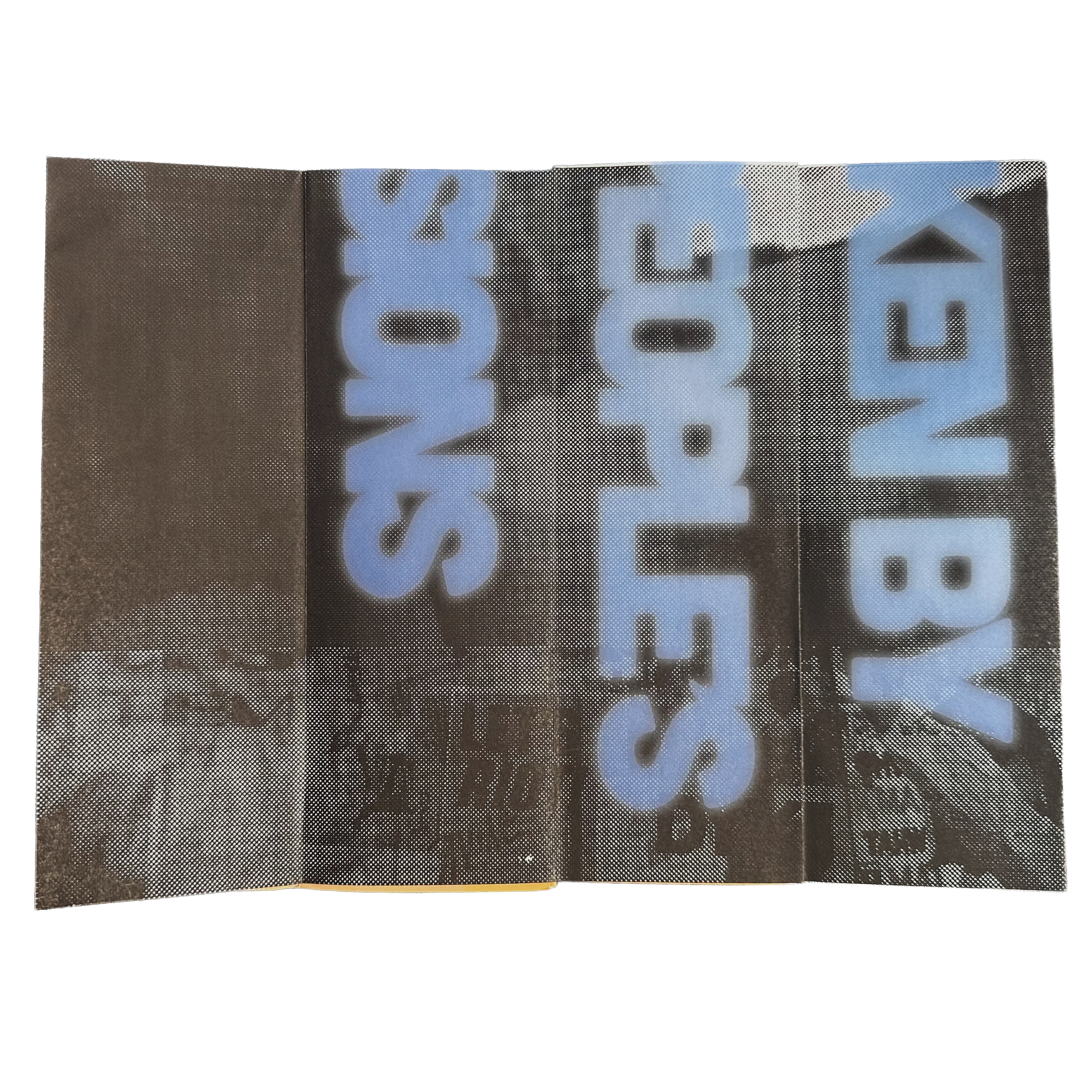
My Body and Other Parties is based on the experiences Shaun (they/them) shared throughout their interview. Although not a traditional “book”, this zine is unbound and unrestricted. The narrative flows through the pages and unfolds into a double sided poster, revealing a glimpse into Shauns experiences that have helped shape them into who they are today.
The book title My Body and Other Parties is in reference to the Carmen Maria Machado novel Her Body and Other Parties. “Machado bends genre to shape startling narratives that map the realities of women's lives and the violence visited upon their bodies” (Phenomenal Media, n.d.), My body and Other Parties is in direct correlation to the violence that is visited upon trans bodies.
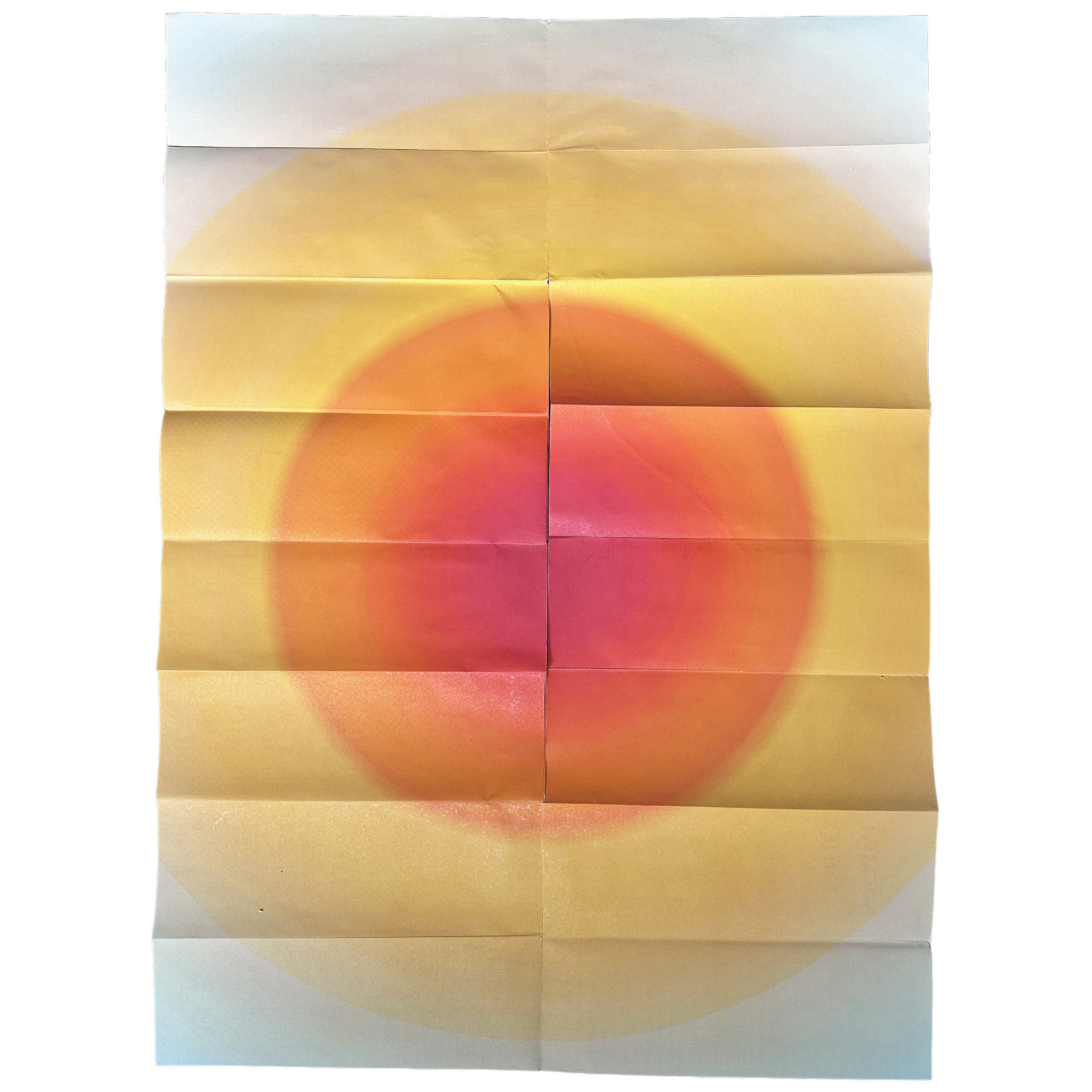
The front of the poster features a red/orange gradient that spans the entire front. This gradient is representative of the sudden and alarming flash that Shaun experienced when they were first recognizing their trans and non binary identity. The back of the poster features the quote from Shaun “I stand firmly in my identity and am not to be shaken by other people's delusions” in a muted blue/grey gradient. Under that gradient are all of the life experiences that made Shaun who they are today.
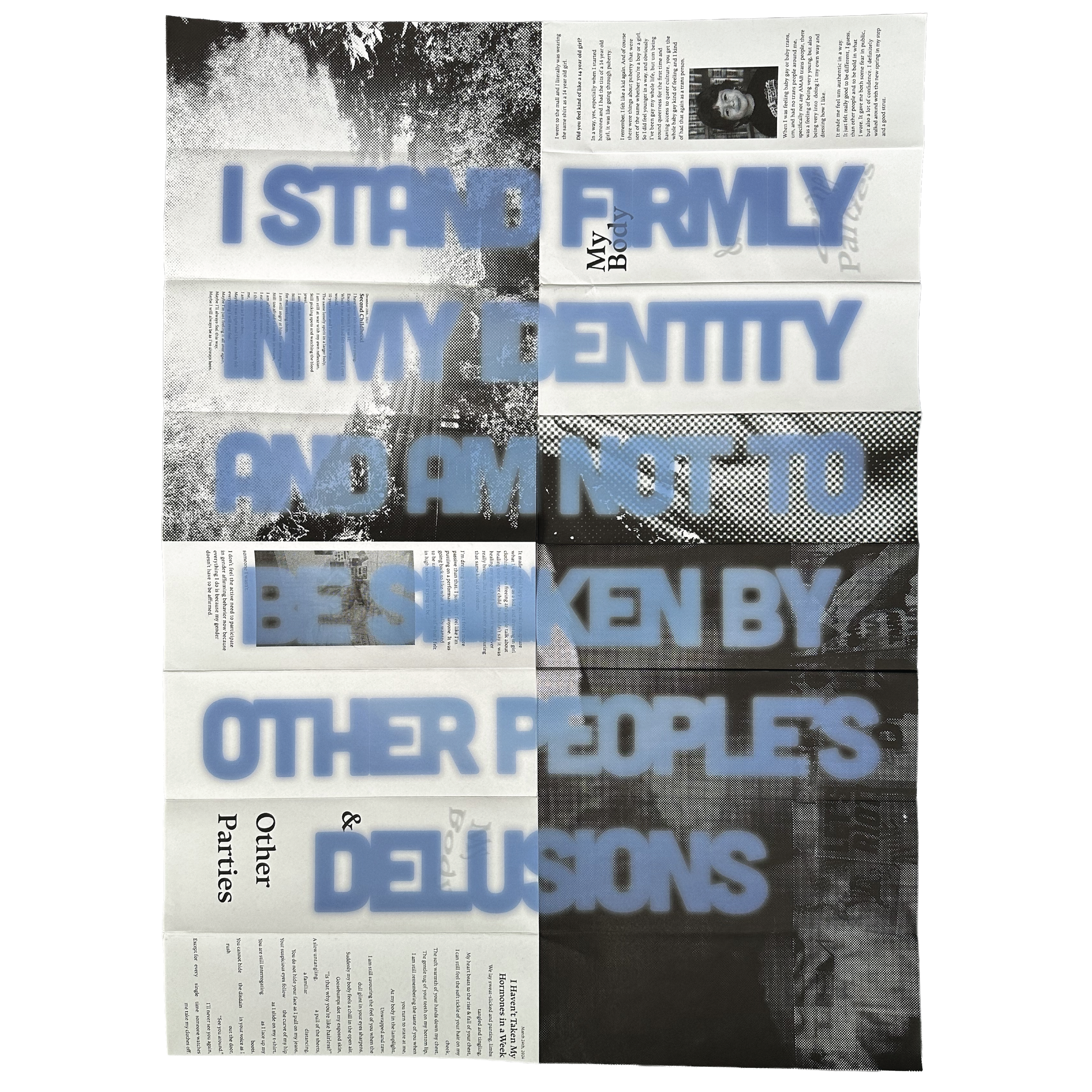
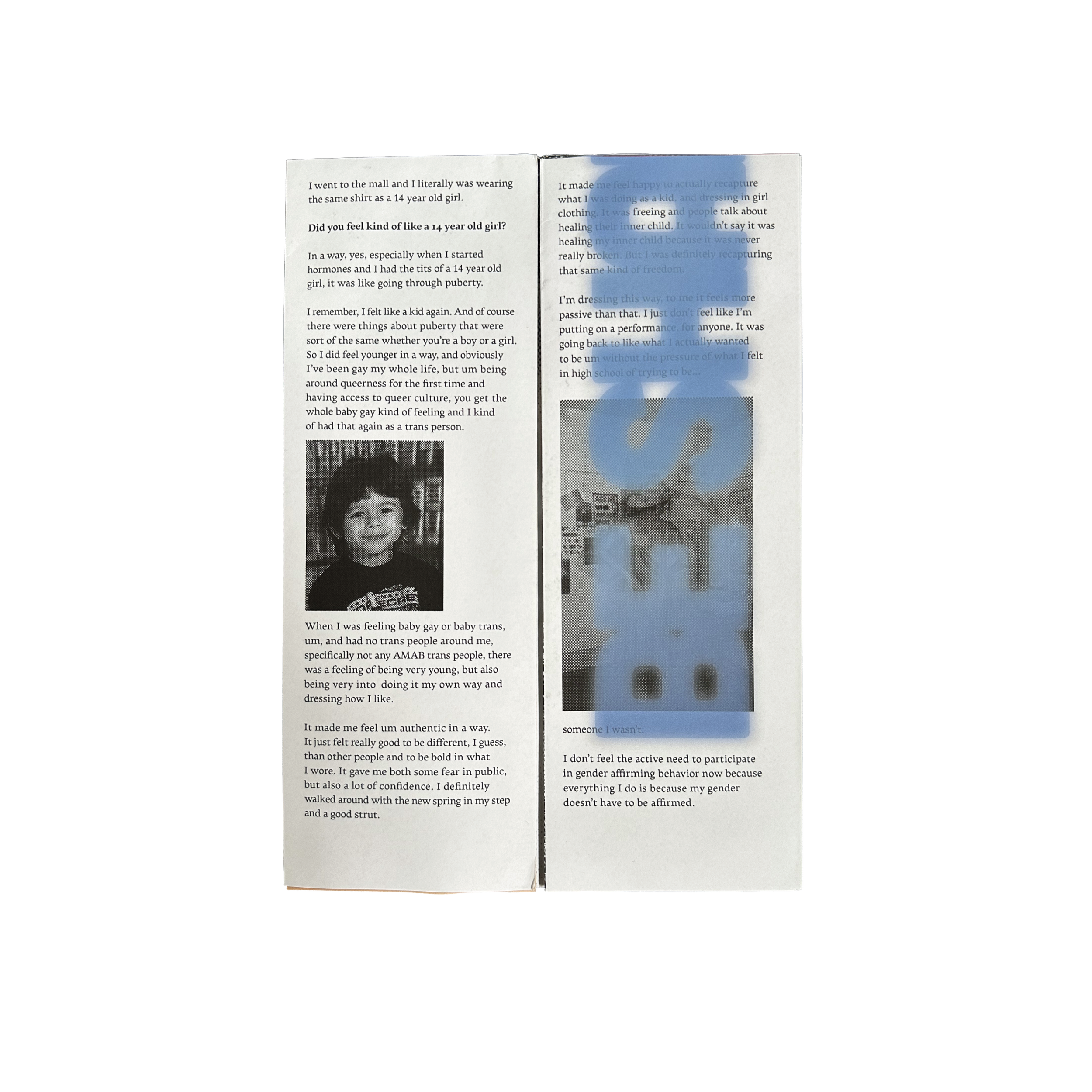
The zine is divided into two sections. “My Body” is about their own experiences navigating their trans identity and experiencing what they describe as “baby trans”. This section is youthful, it features a baby picture, a picture of Shaun coming into their own skin, discussions of feeling “baby trans”, as well as a poem written by Shaun titled “Second Childhood”. This section is meant to embody the young and new energy, maybe making you feel small or naive as you navigate through this transition for the first time. It may make your heart grow fond, or you may recall your own feelings of coming into your own when you were younger.

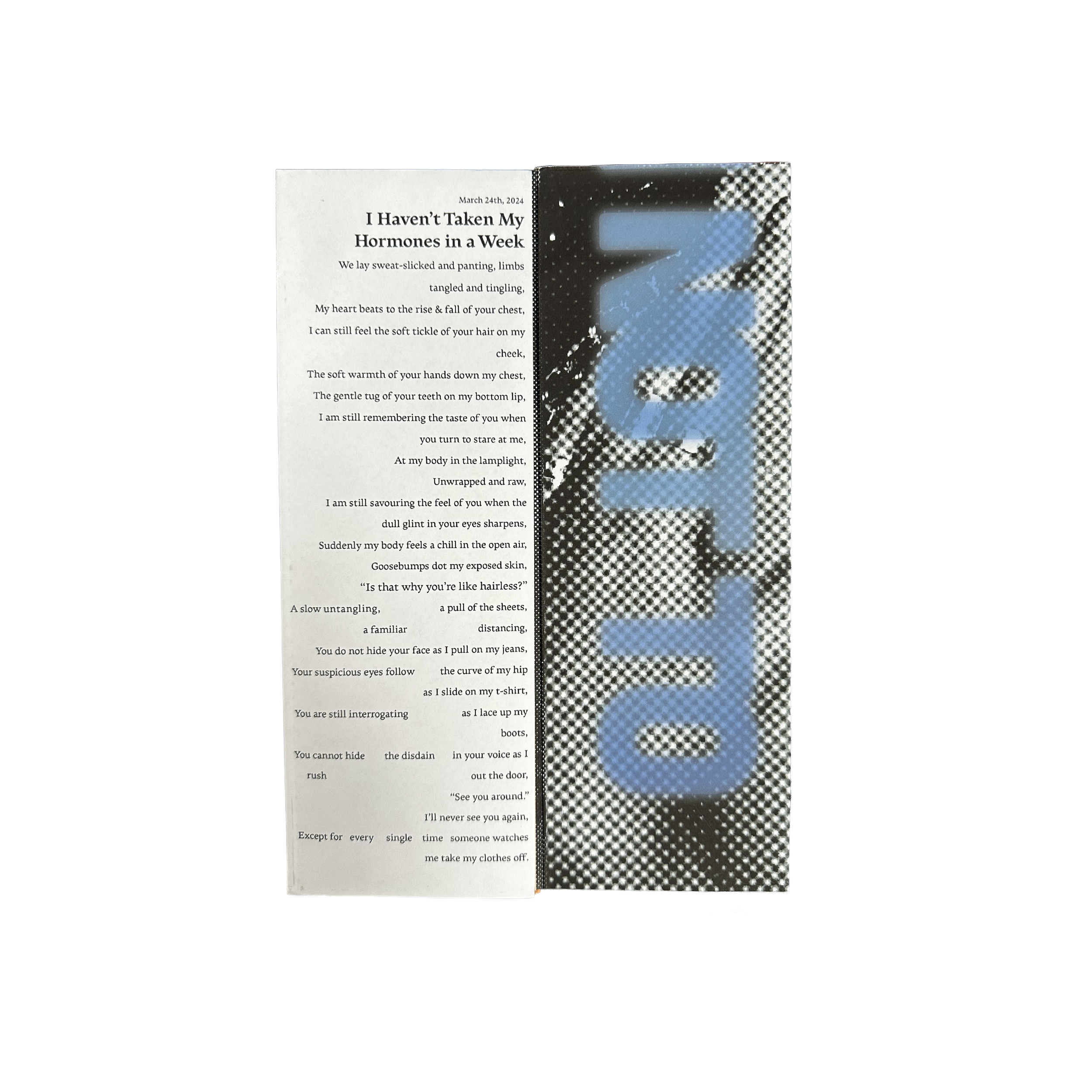
The second section of the zine, “and Other Parties” is about others casting their own judgements, wants, and desires on to you and your body. This section is more indicative of the fetishization of trans people, it is meant to make you feel dissociative, uneasy, and observed. It features another poem written by Shuan titled “I haven’t taken my hormones in a week”. The oversized black and white halftone image treatment adds to the slightly dazed and dissociative experience. With overlapping images and shifting transparencies, the visual overstimulation has an intense and jarring effect.

The Tender Heart of a Tranny
The Tender Heart of a Tranny is based on the experiences Matteo (he/she/they) shared during their interview. One of the key discussions throughout Matteo's interview was about their gender fluid identity. This identity allows them to “shift” in a sense from one end of the gender spectrum to the other. My goal with this book was to visually represent this shift, thus I landed on a spiral bound book with a series of five rotating covers. Each cover is representative of the different personas that Matteo embodies on a day to day basis by using the same title but different fonts, colours, and aesthetics. The spiral binding allows for the reader to decide which cover they would like to front at any given moment.

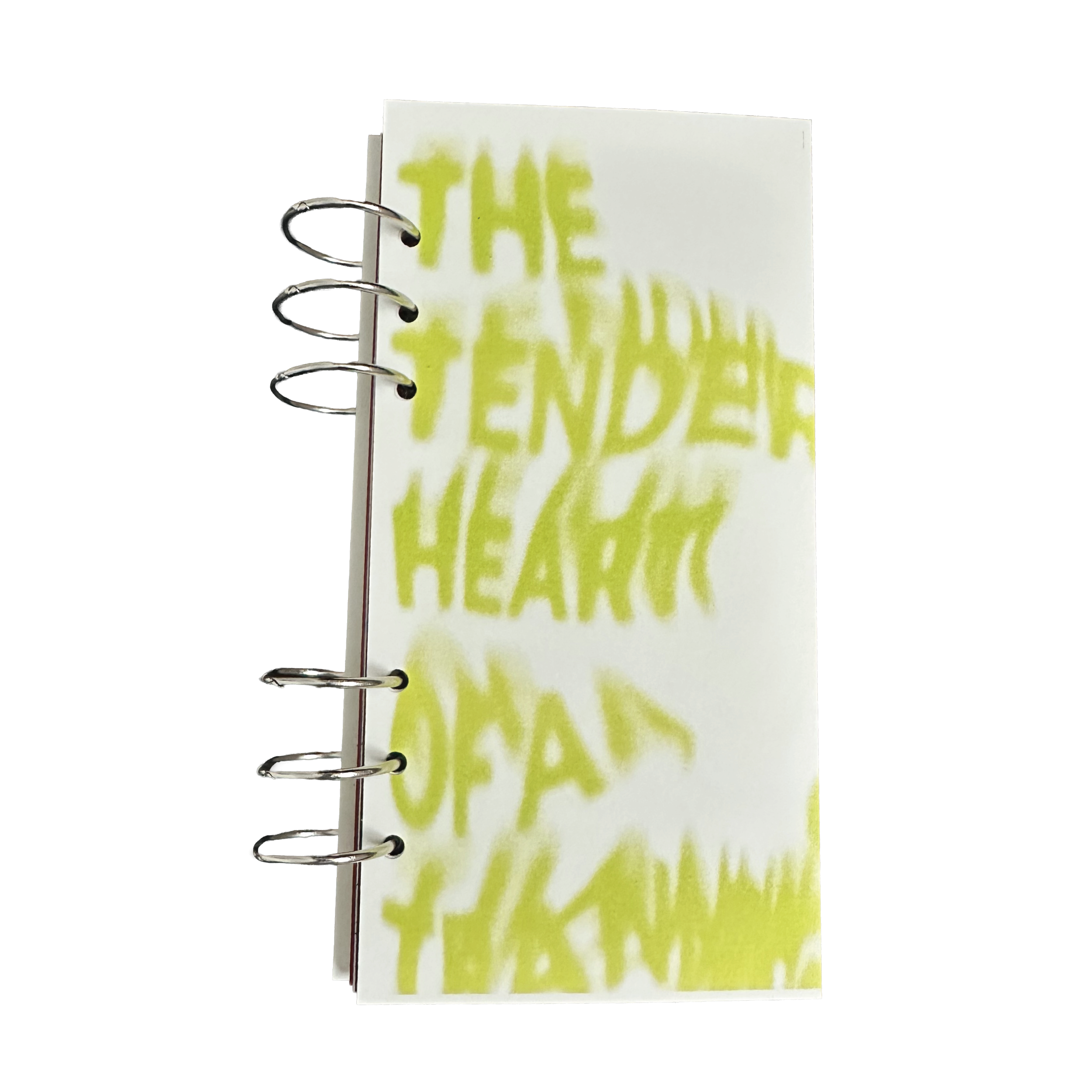


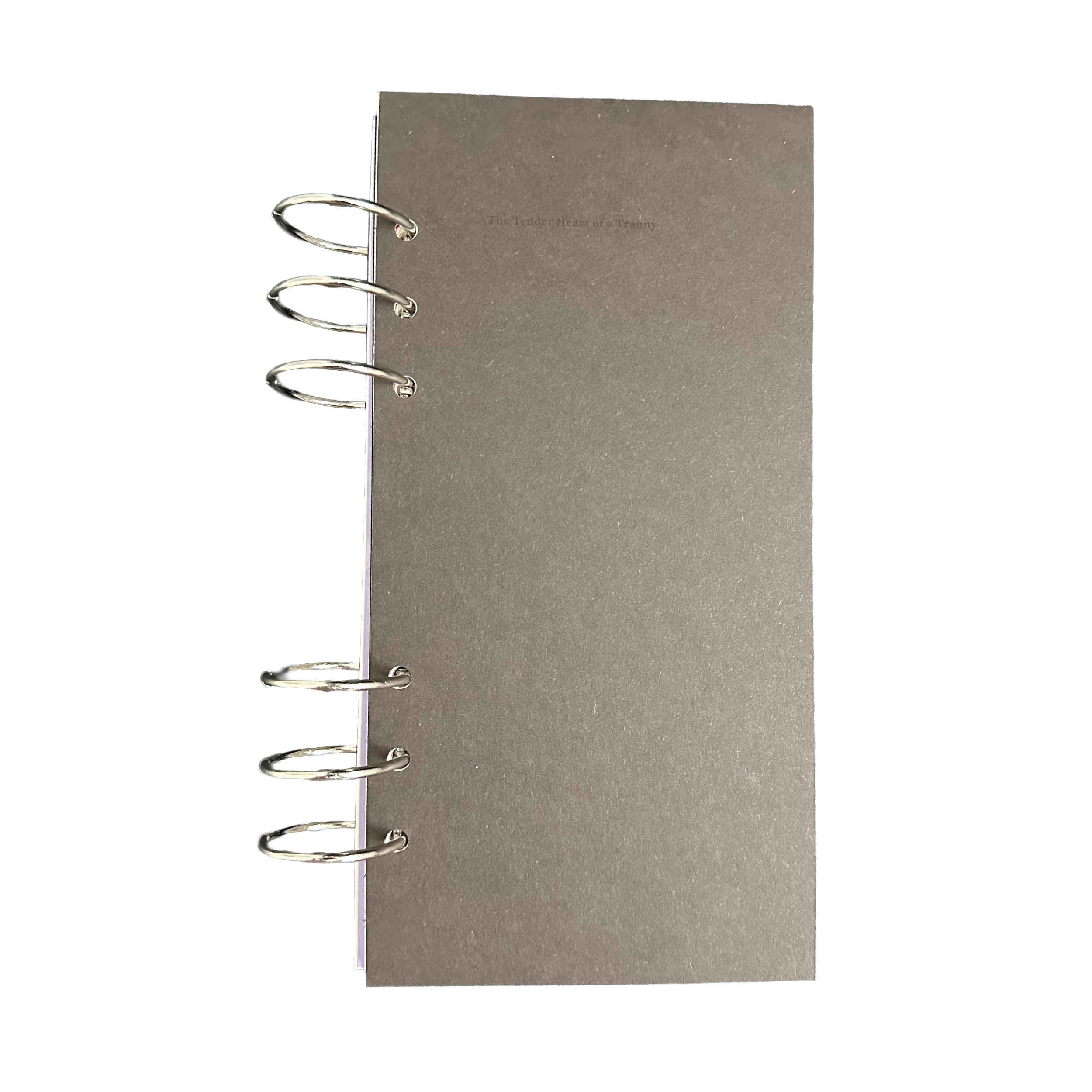
Following each cover are the “guts” of the book. The guts consist of the entire transcript of the interview.
This provides a very deep and intimate look into Matteo's personal experiences that have shaped how they present themself to the world.
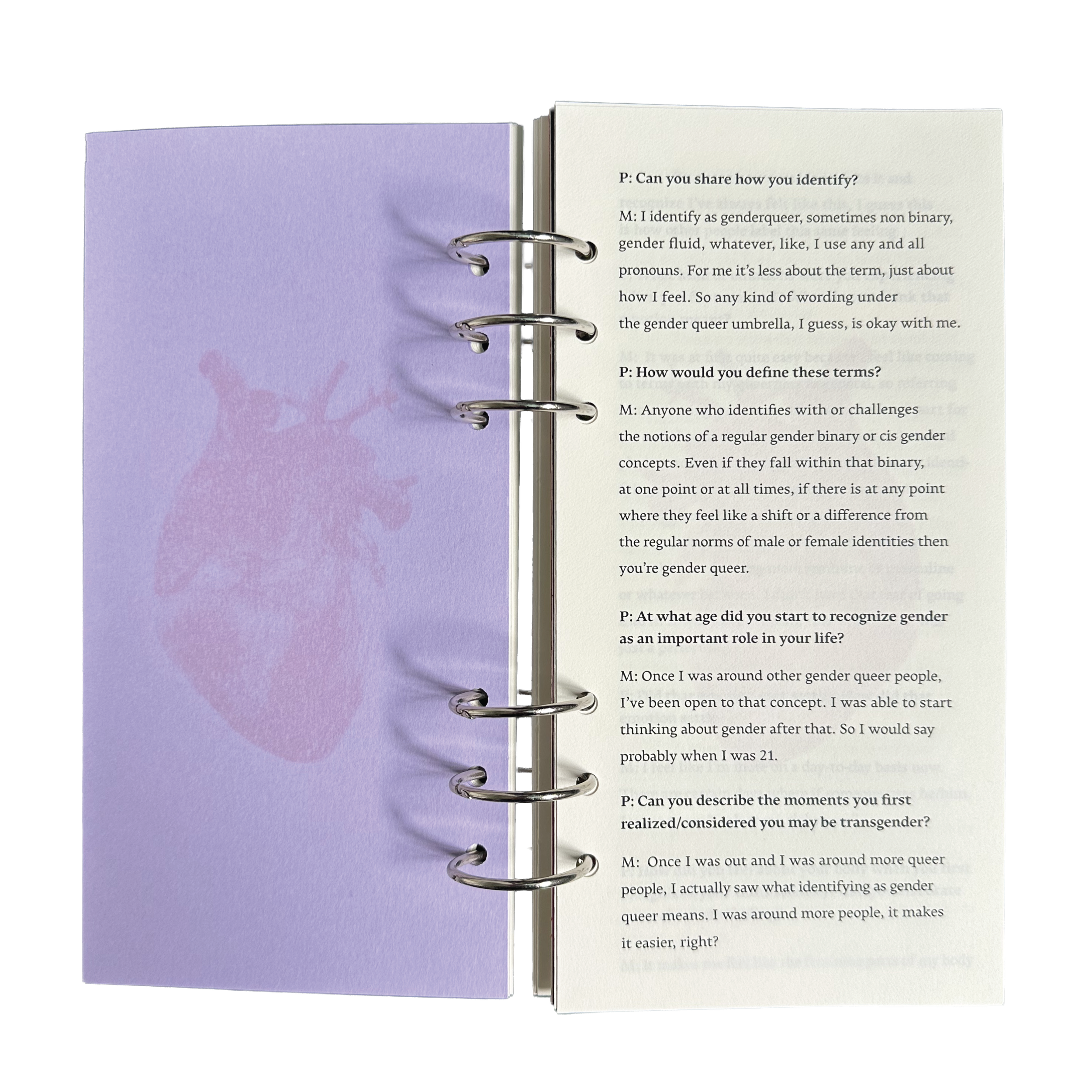
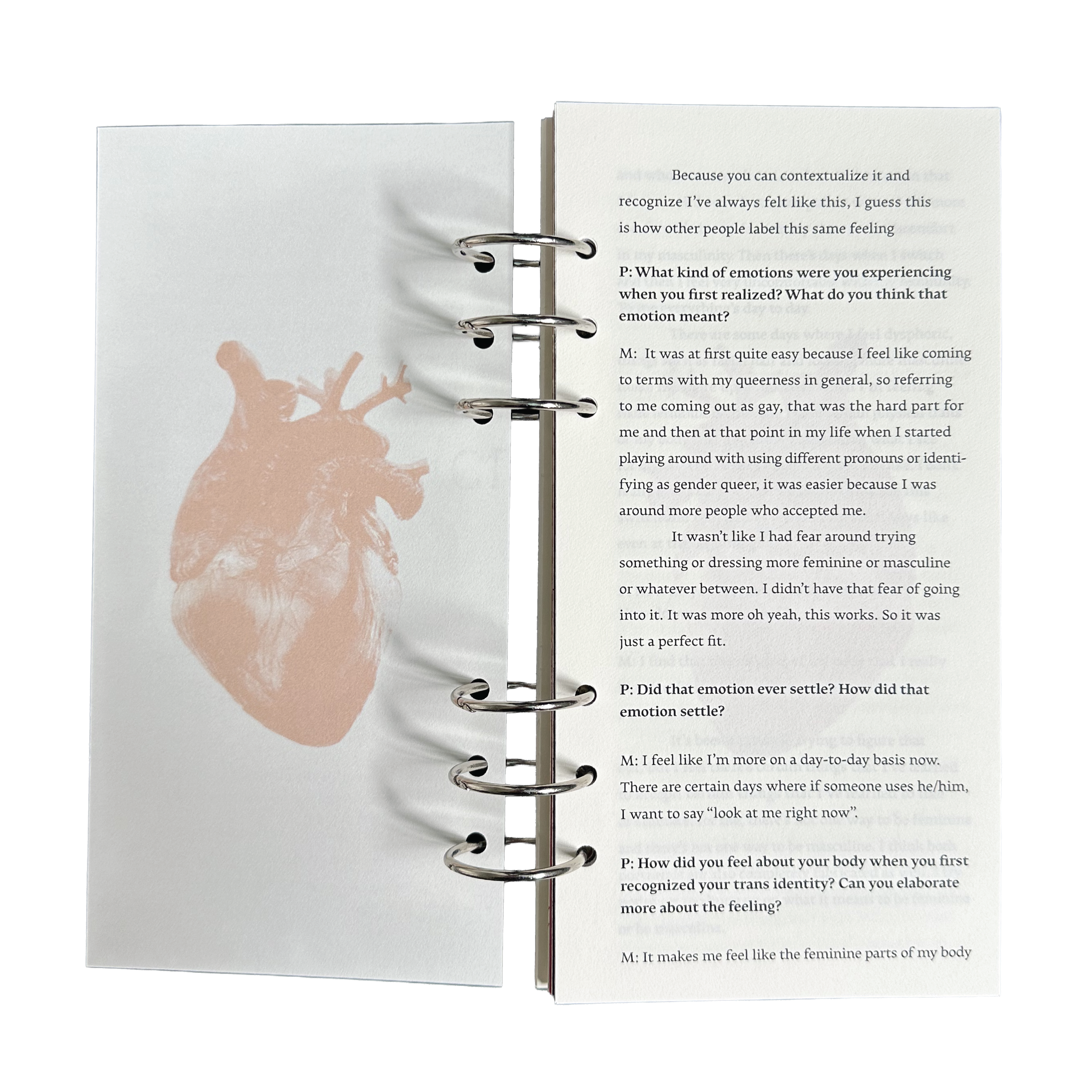
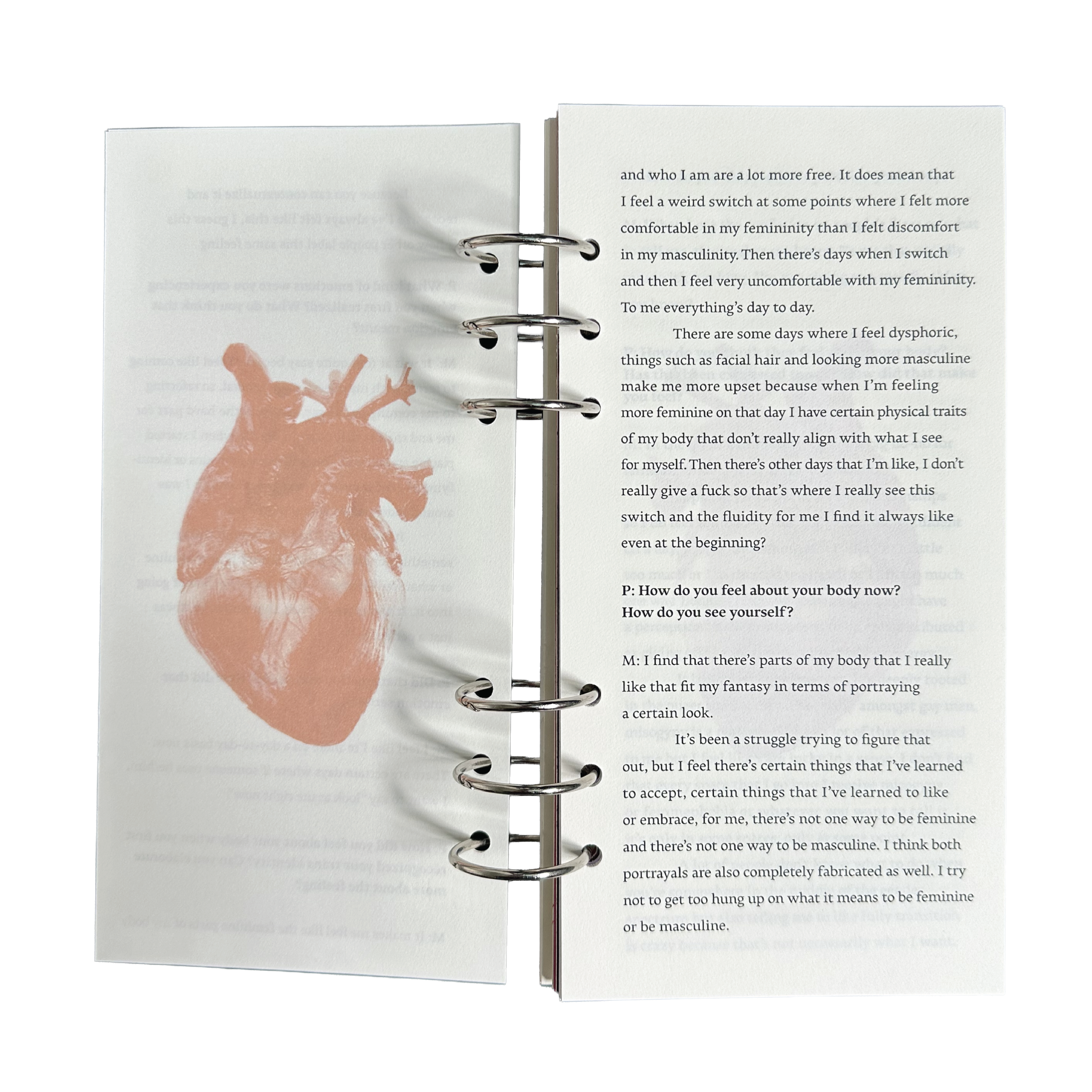
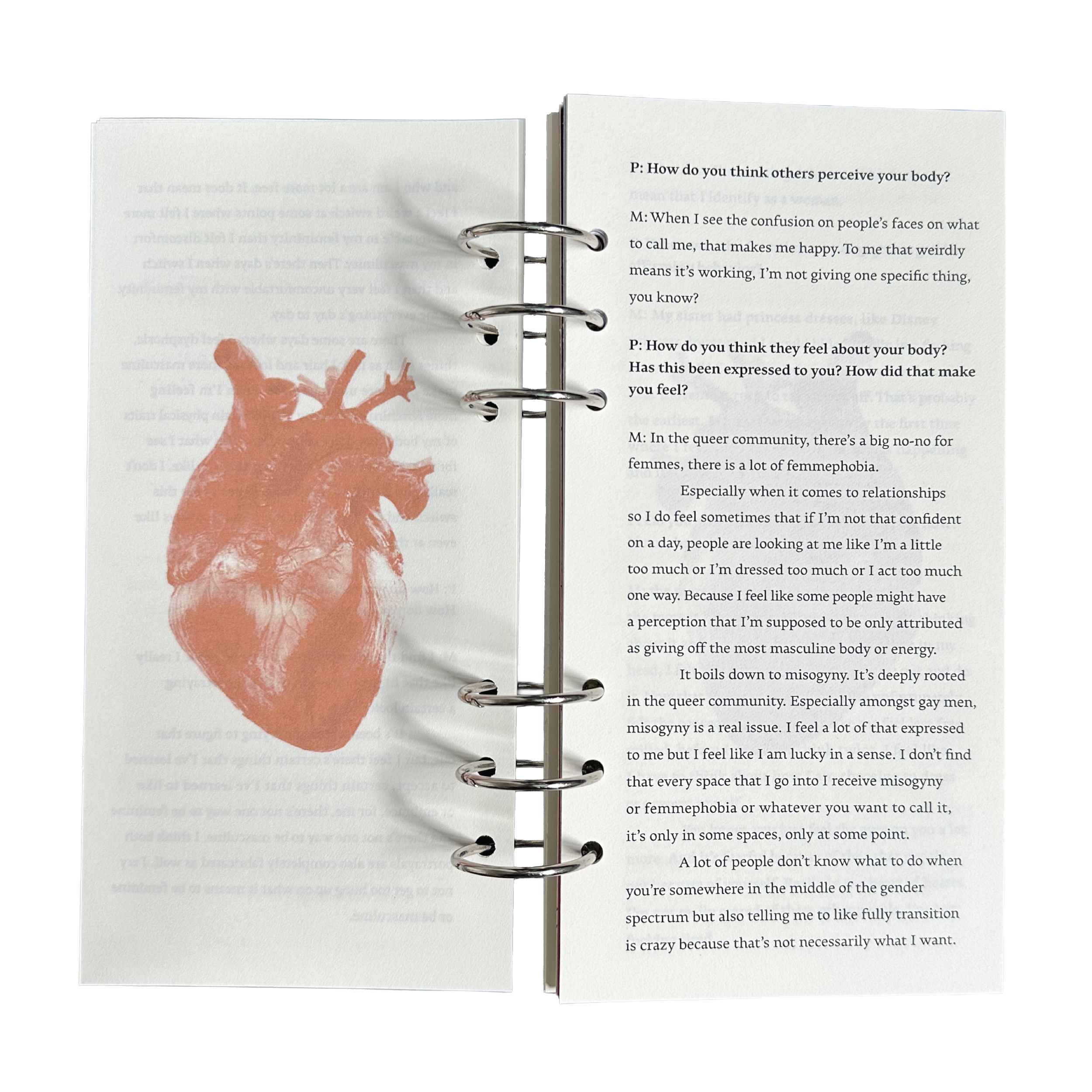
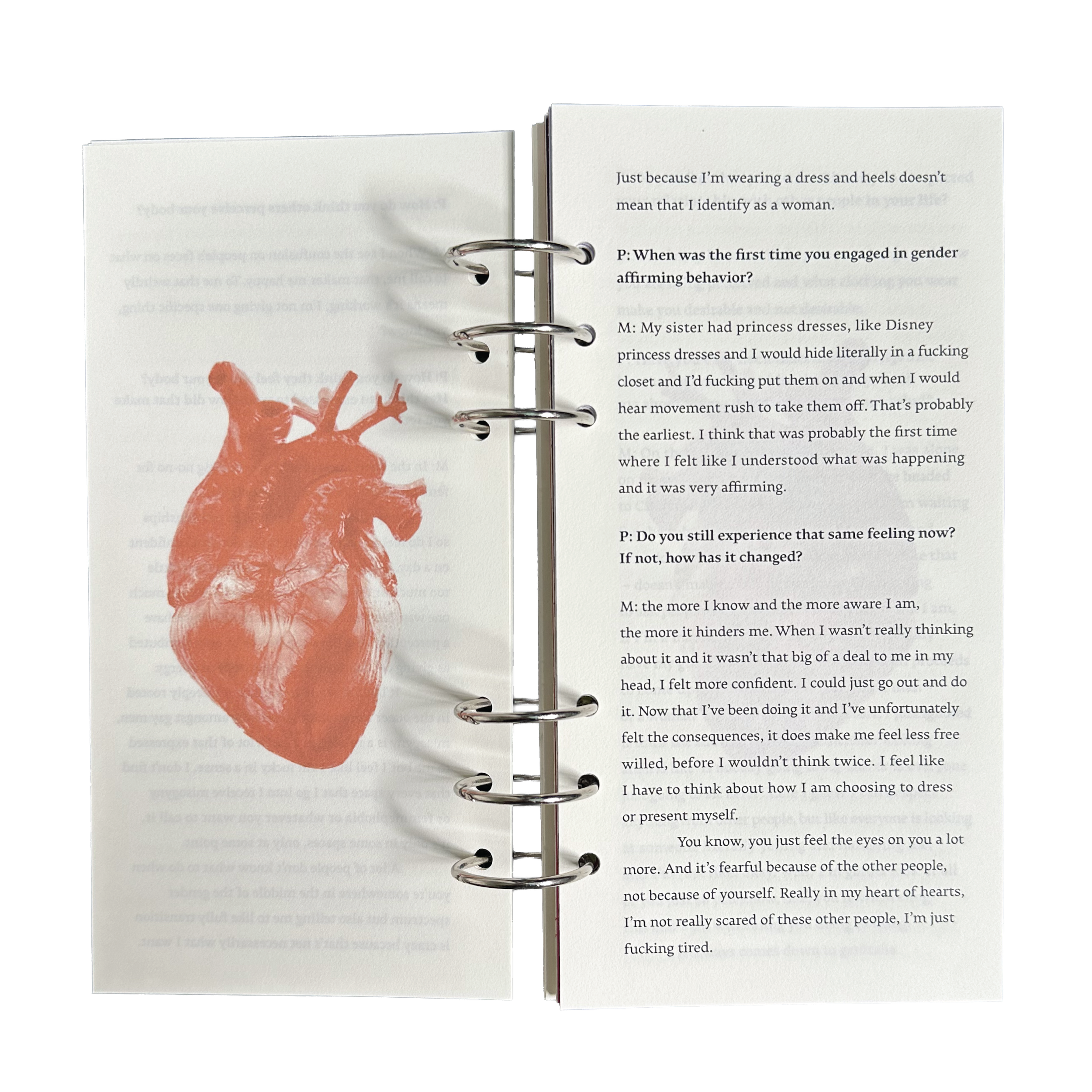
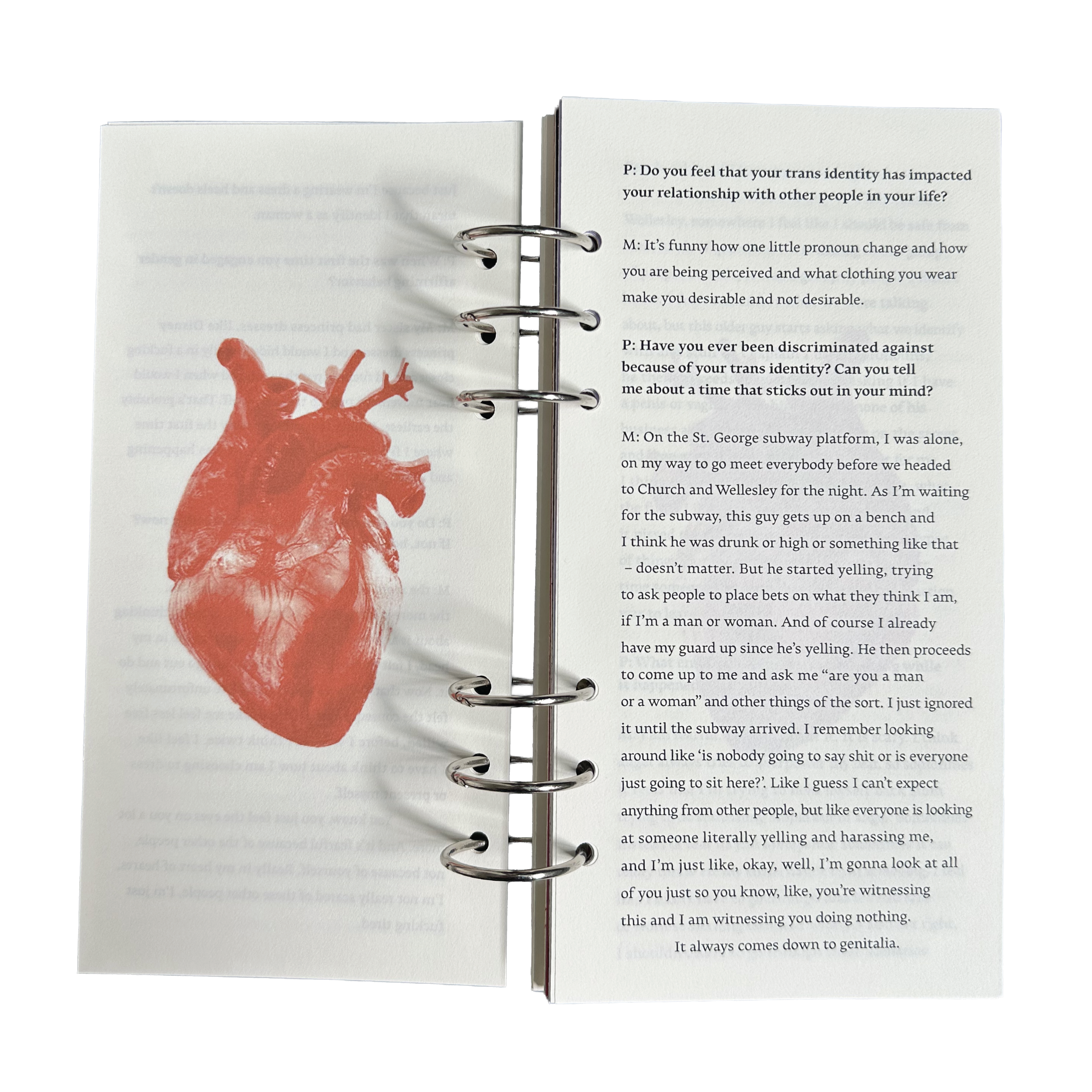
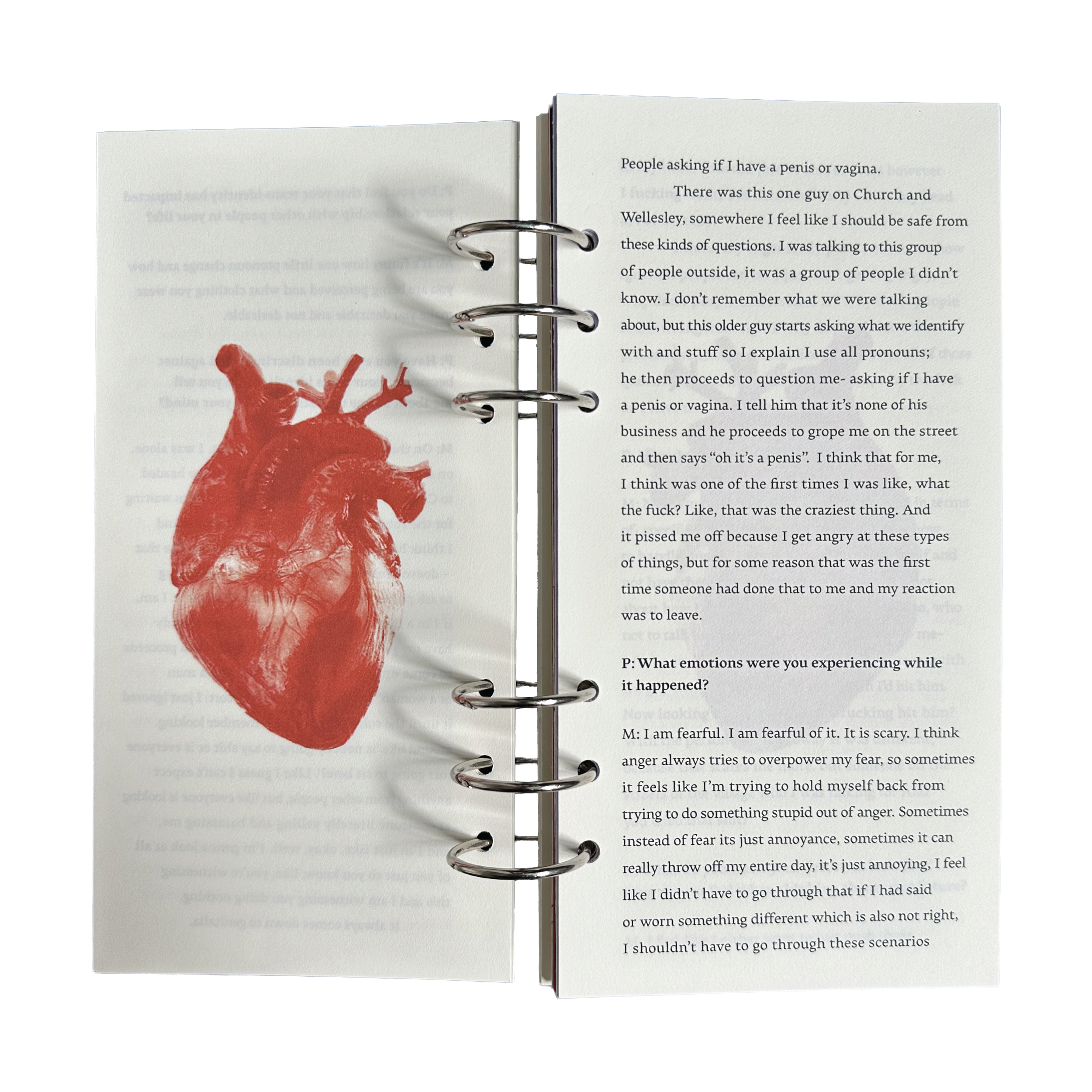
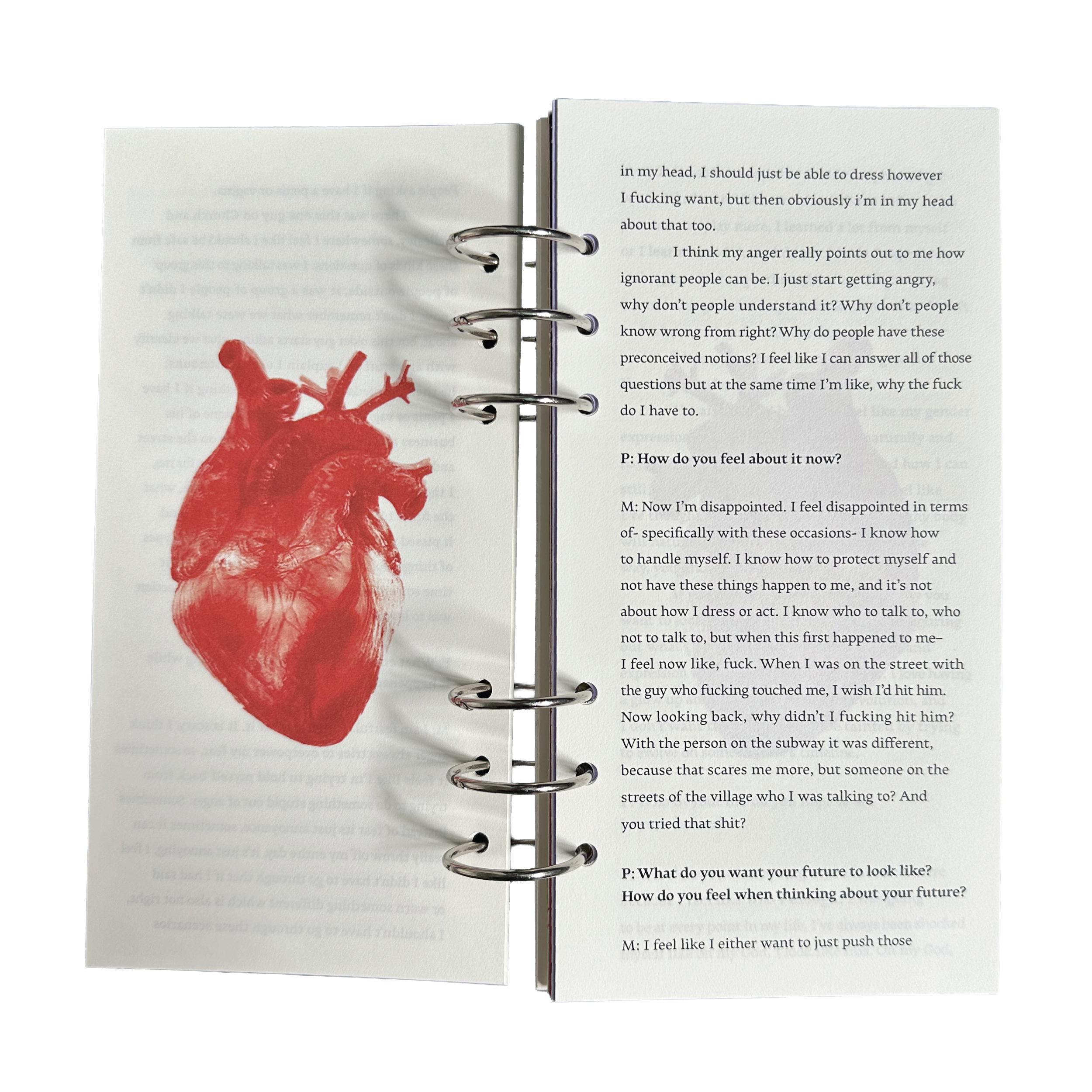
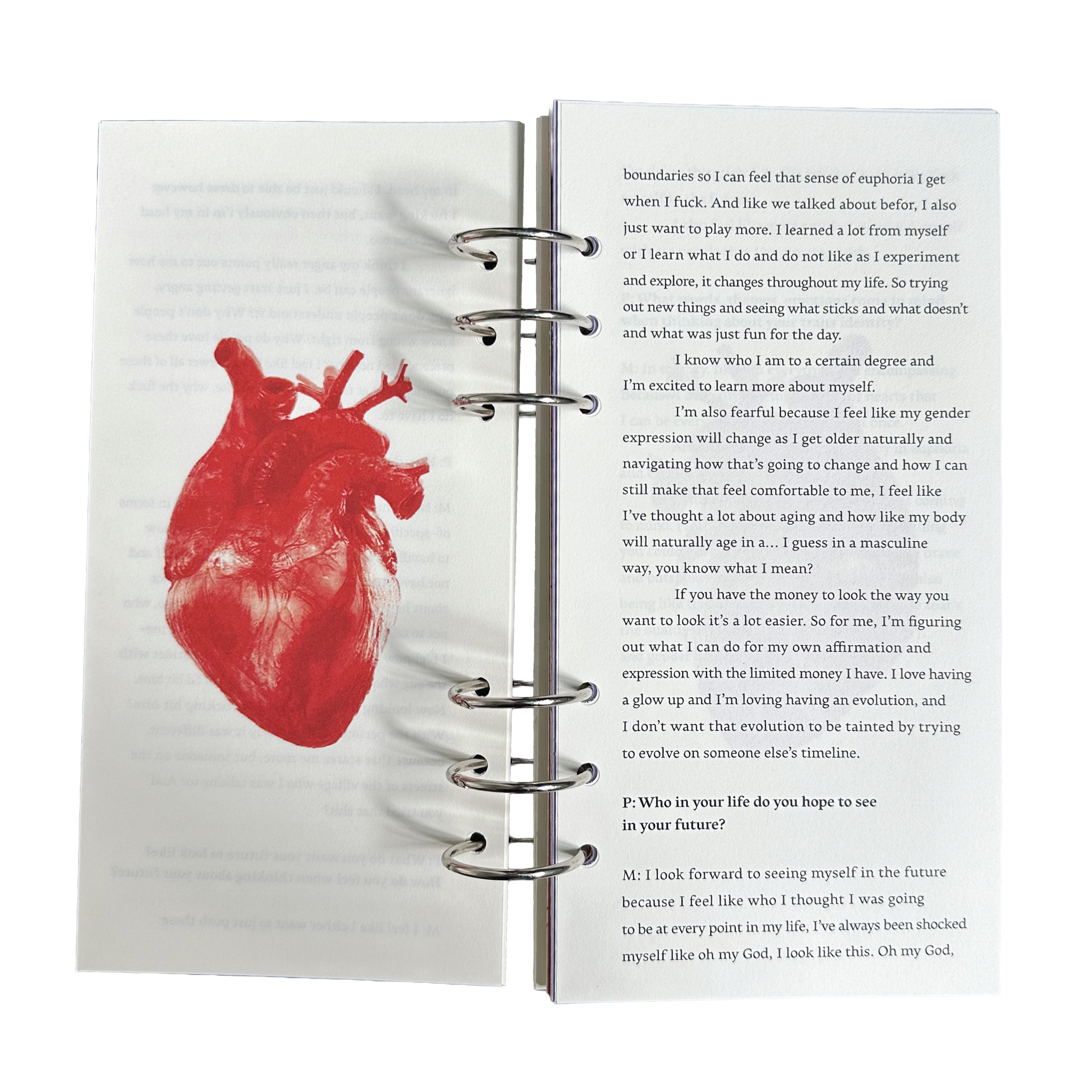
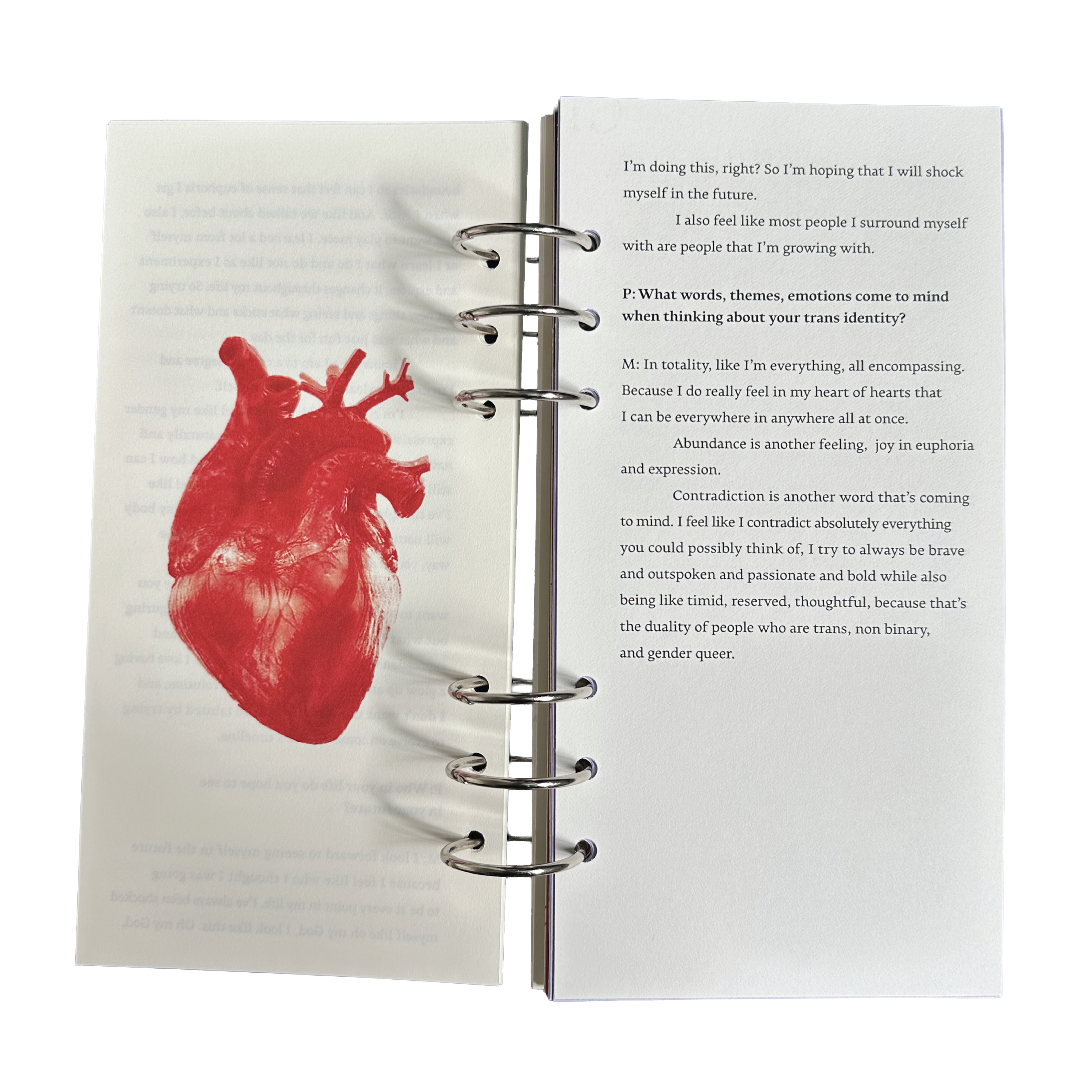
The title of the book “the tender heart of a tranny” is in reference to topics of the interview, which includes the discrimination that Matteo has experienced. These acts of transphobia against Matteo are what lead to the decision to include the slur “tranny” in the title. The contrast of a tender heart paired with the slur tranny, provides a juxtaposition that challenges the word tranny, a word that is devoid of empathy and benevolence. This is further emphasized through the visualization of the “tender heart” by featuring a heart on the verso pages. The heart increases in opacity to emulate the heart growing fonder and the bravery Matteo has exhibited throughout their life.
A Record of My Soul
A Record of my Soul is based on the experiences AJ (they/them) shared throughout their interview. This book is based on a quote they said during the interview, “My gender and my identity has so much more to do with my mind, my heart, my spirit, the way I love, the art I create, the friends that I keep, my politics”.
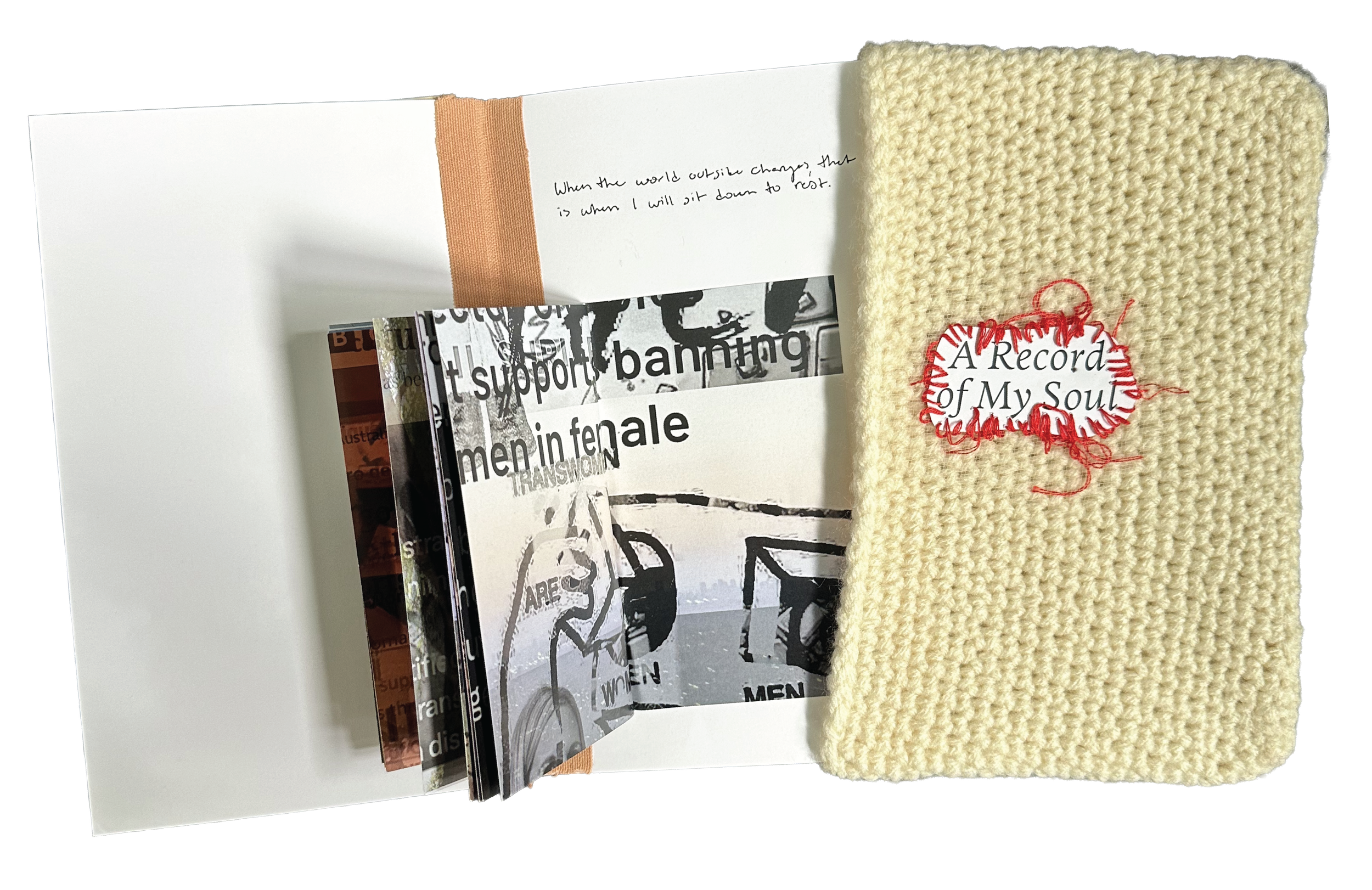
The book is encased in a tight flesh toned crocheted cover with the title embroidered on the front. The crocheted cover is representative of the skin, what is chosen to be presented to the world, the outer shell that encases the “soul” aka the book.
The book is bound using trans tape, a form of gender affirming care that AJ utilizes, and something that reminds AJ of when they first began their transition. The binding holds the book together, but the word “binding” also refers to the act of binding the chest, a form of gender affirming care often used to compress the chest to appear flat, providing feelings of gender euphoria.
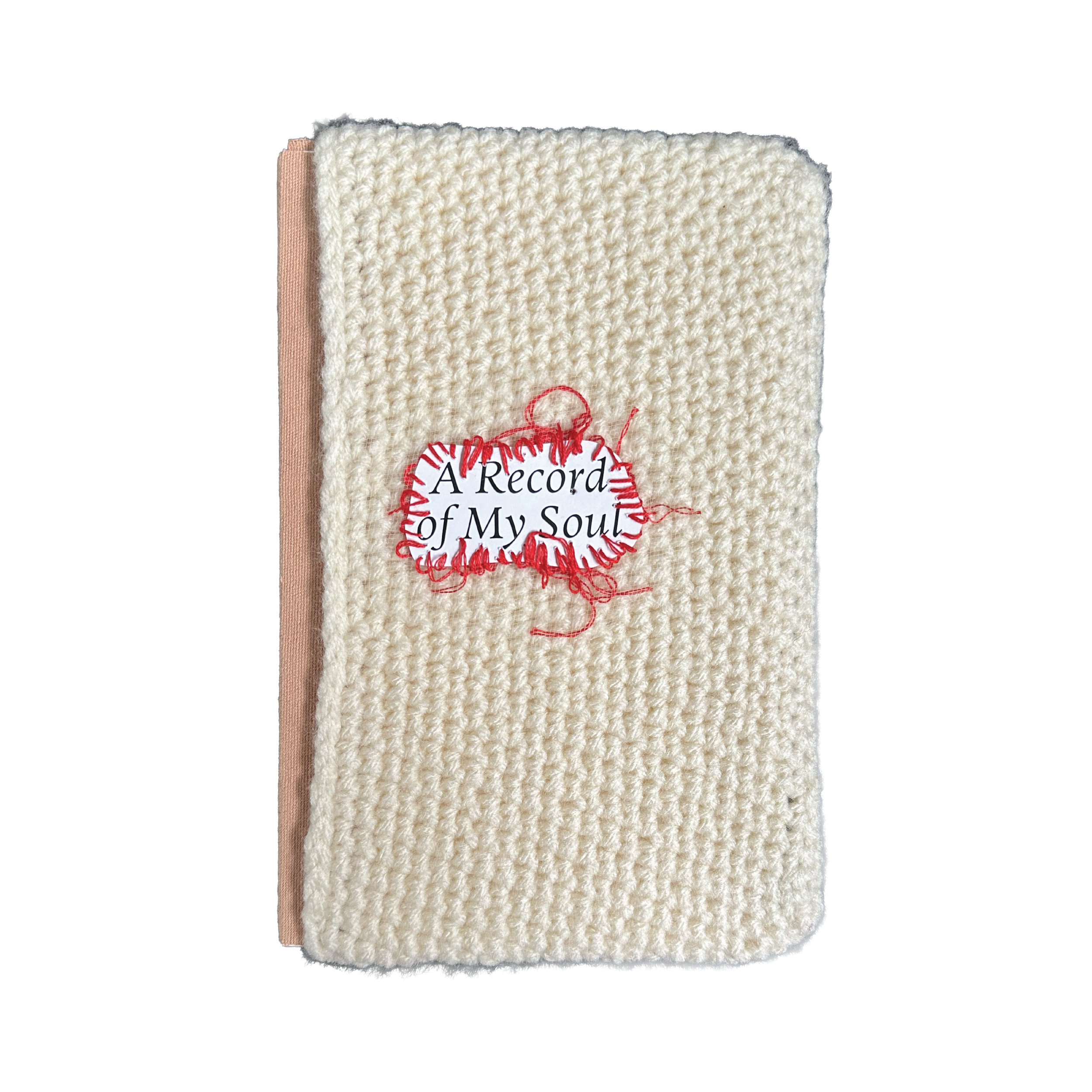
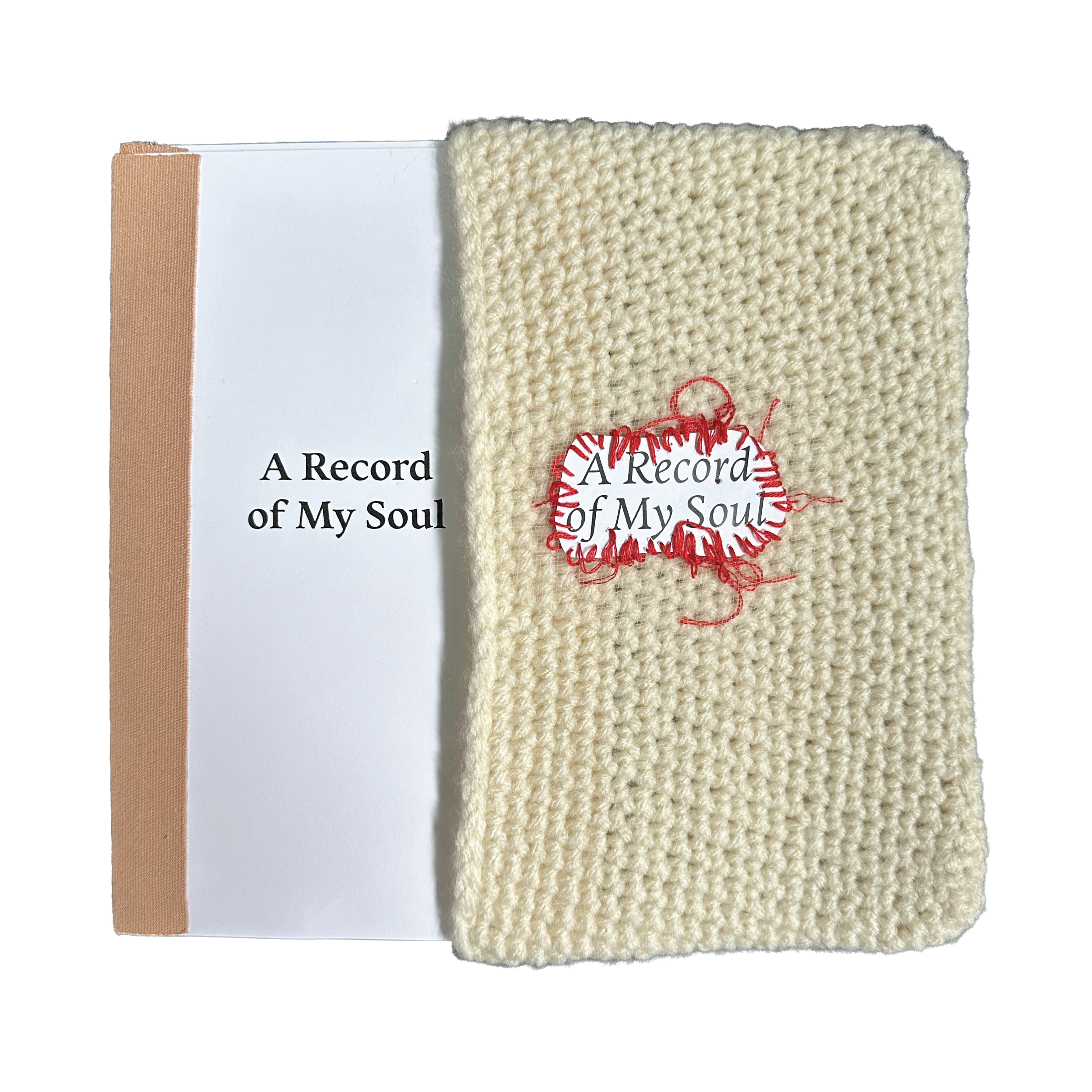
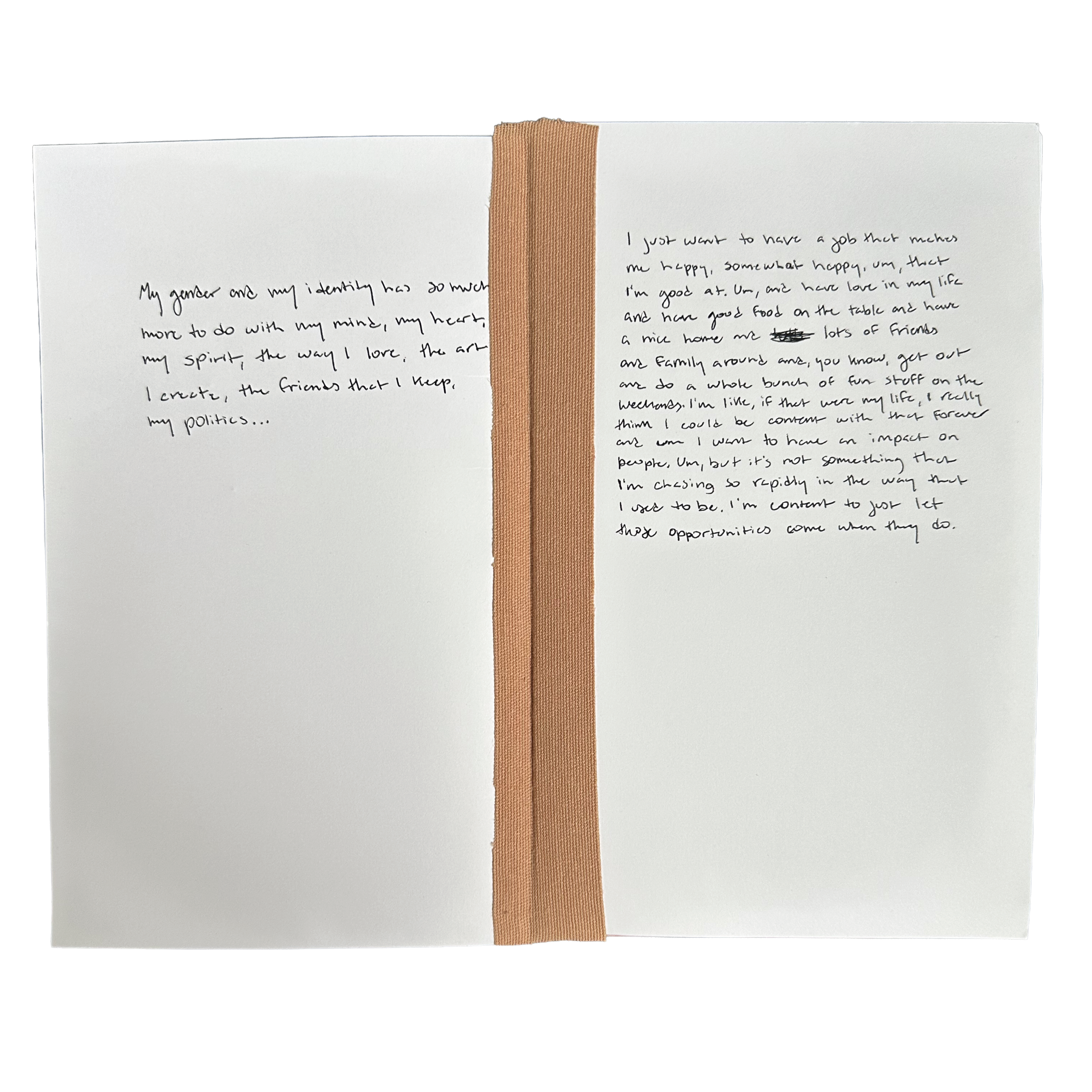
“A Record of my Soul” is a collection of memories, photos, art, and quotes that represent what makes up a person, specifically AJ. This book is overflowing with experiences and allows the reader to gain a glimpse into AJ’s life experiences that have helped shape them into who they are today.
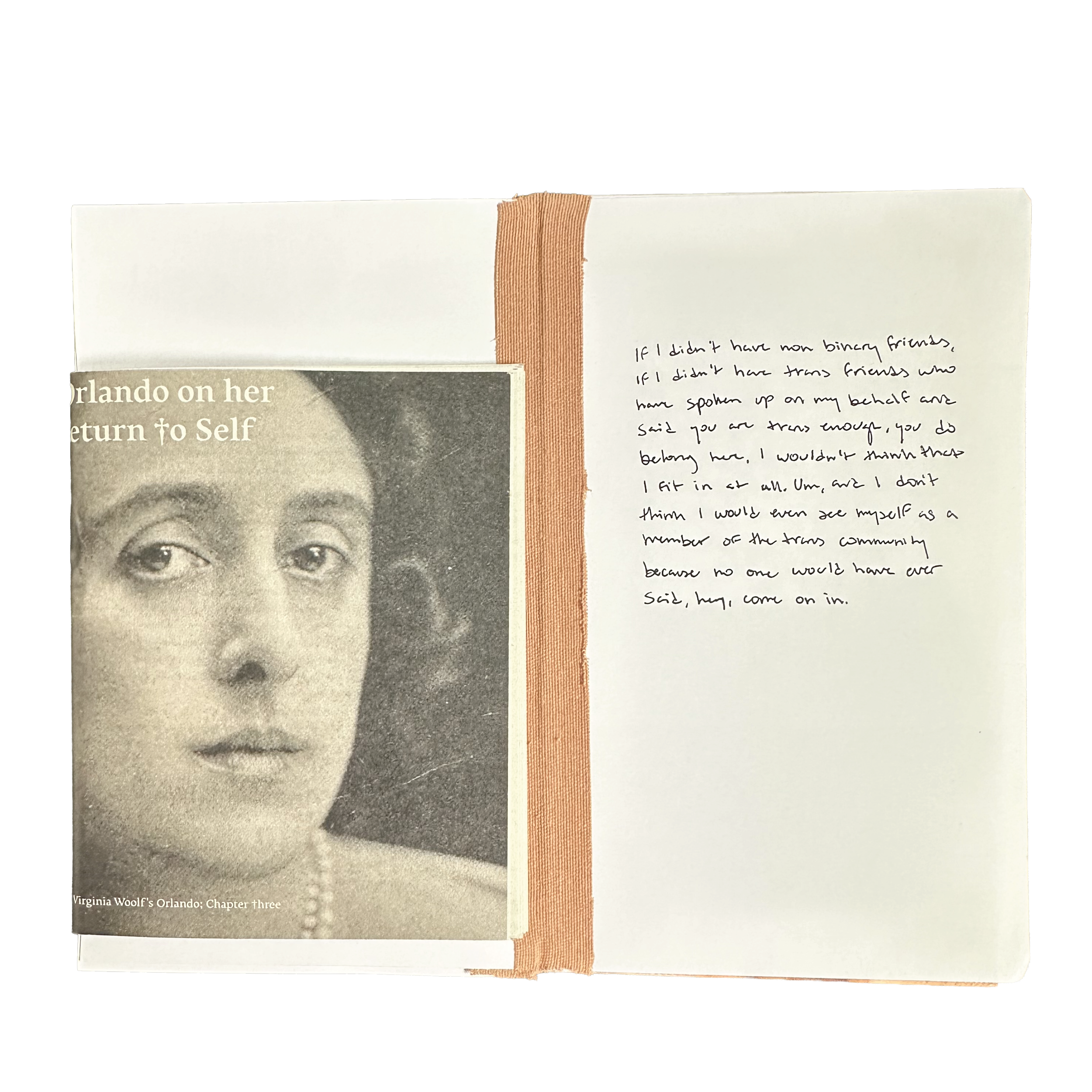
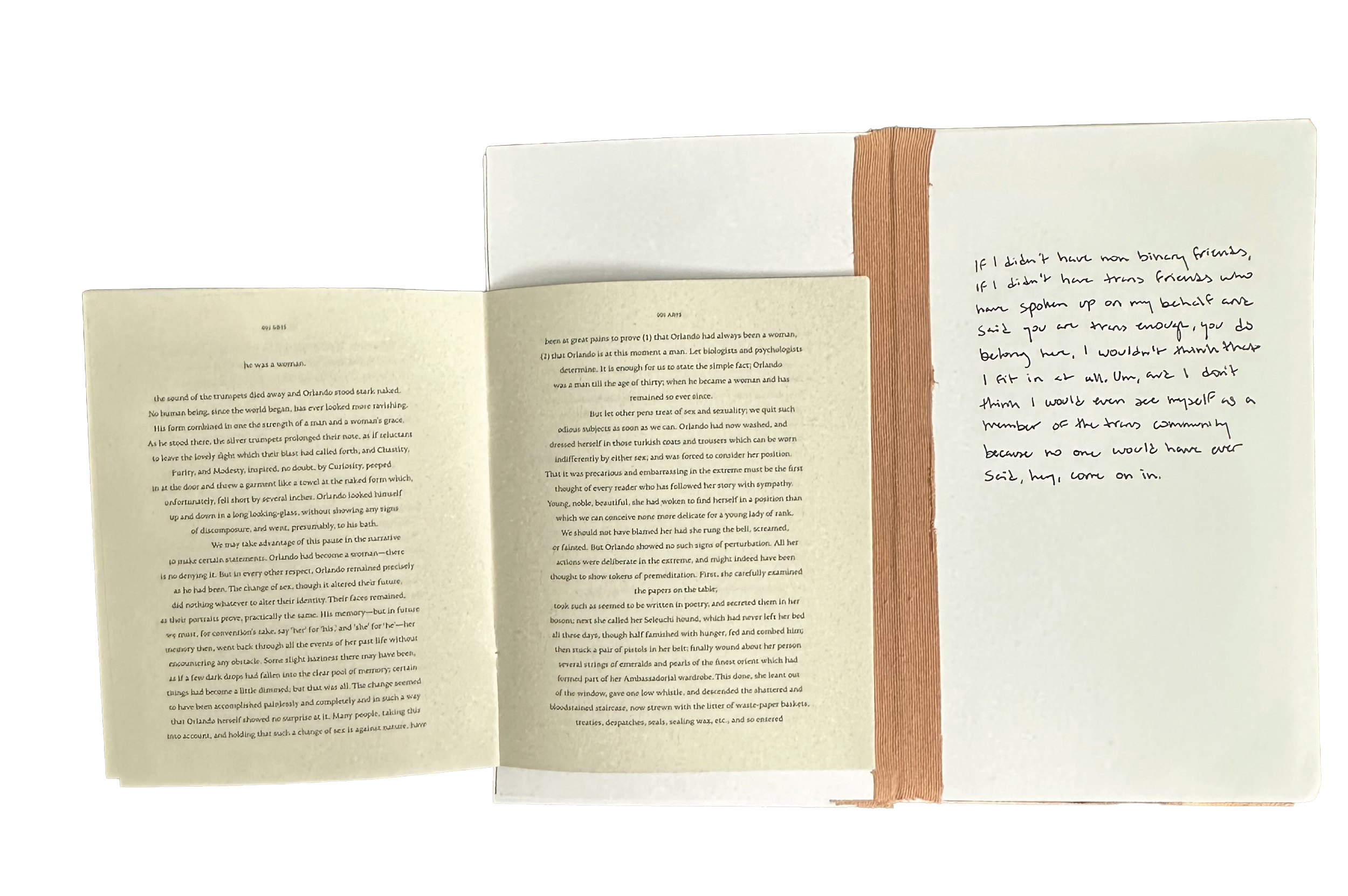
Within the book, there are three inserts. The first insert is titled Orlando on her return to self which includes chapter three of Virginia Woolf’s Orlando. Many trans individuals feel their trans experience is represented through Orlando as he enters a seven day sleep and wakes as a woman in chapter three. There is a countdown featured at the top of each page labeled “Before Return to Self” and “After Return to Self” which countdown to when Orlando awakes.
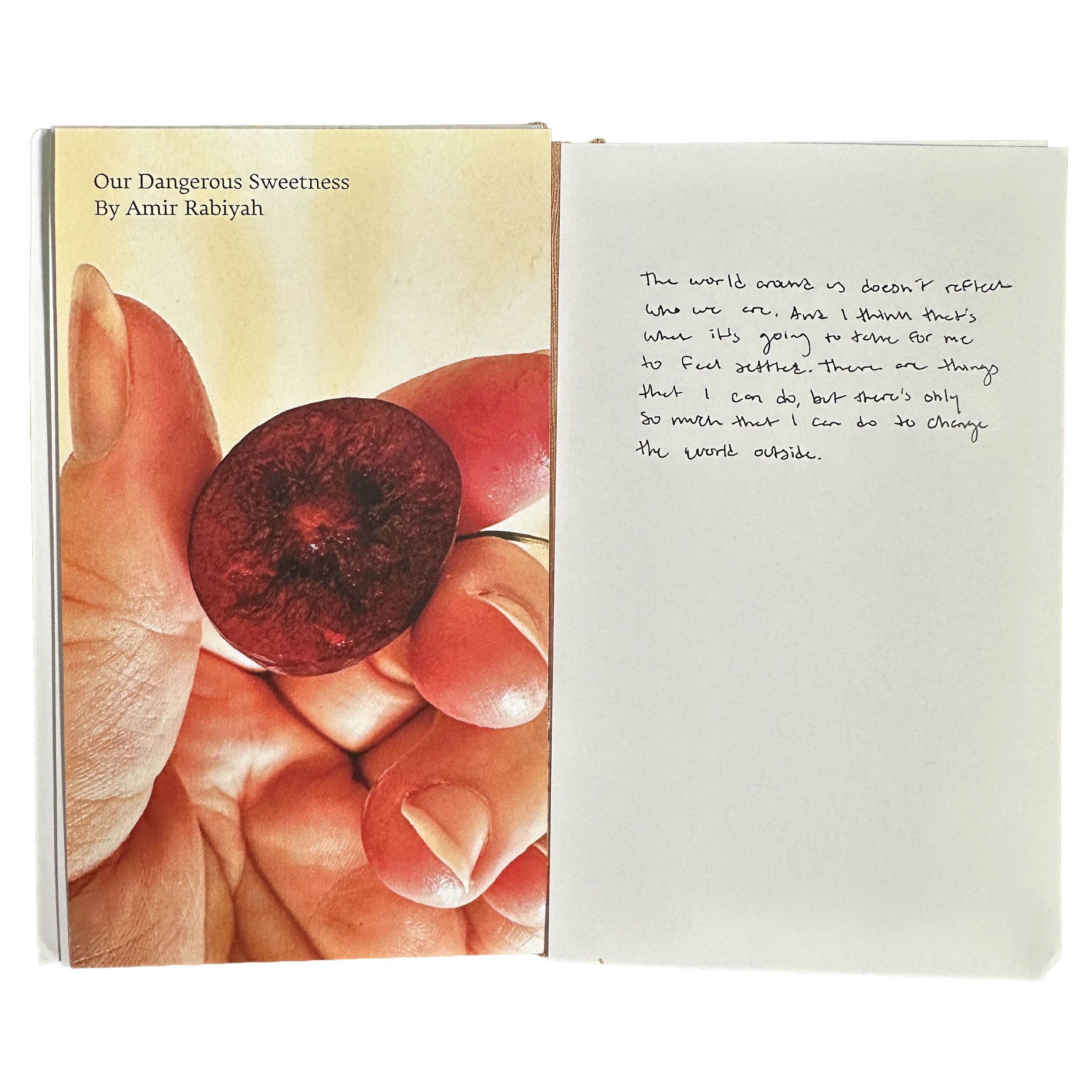
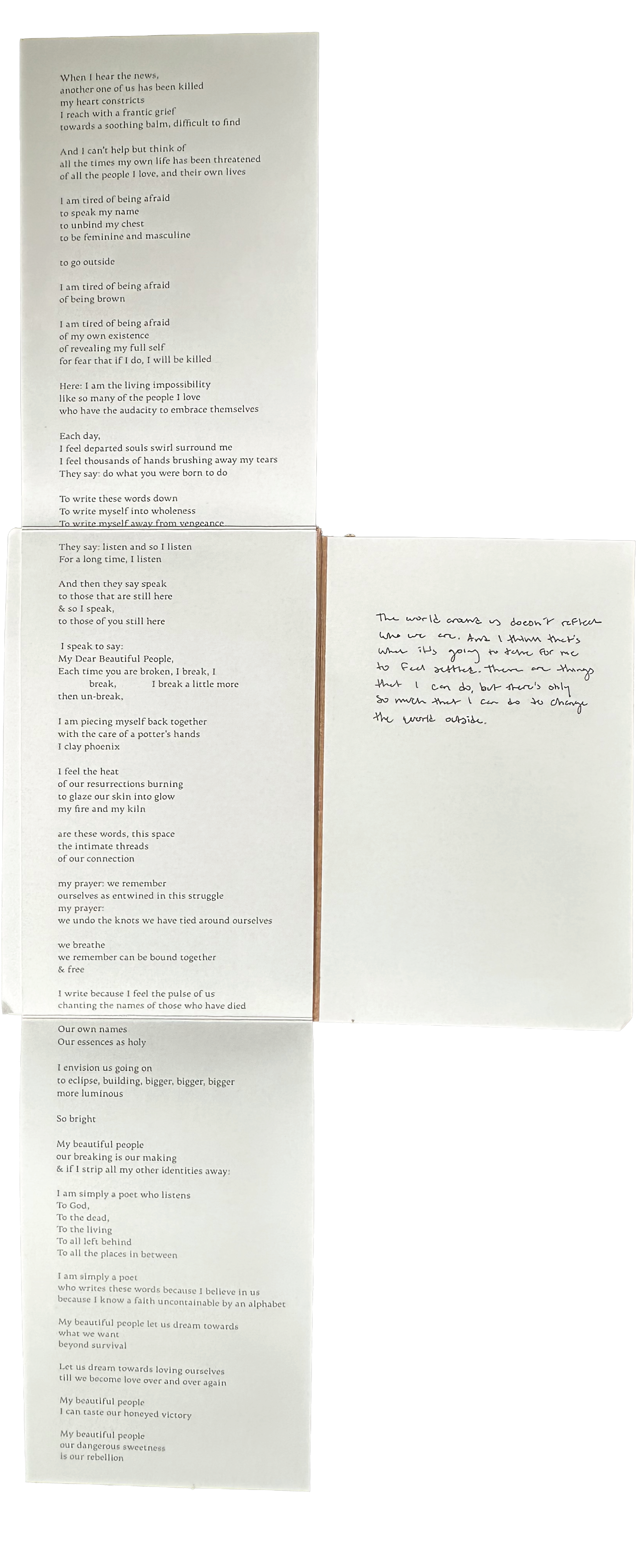
The second insert is a poem titled Our Dangerous Sweetness By Amir Rabiyah, this poem was sent to me by AJ when asked if there was any media that they felt particularly connected to and that may have helped them in their transition. The poem is heart wrenching and candid about the harsh realities many trans people experience throughout their lives.
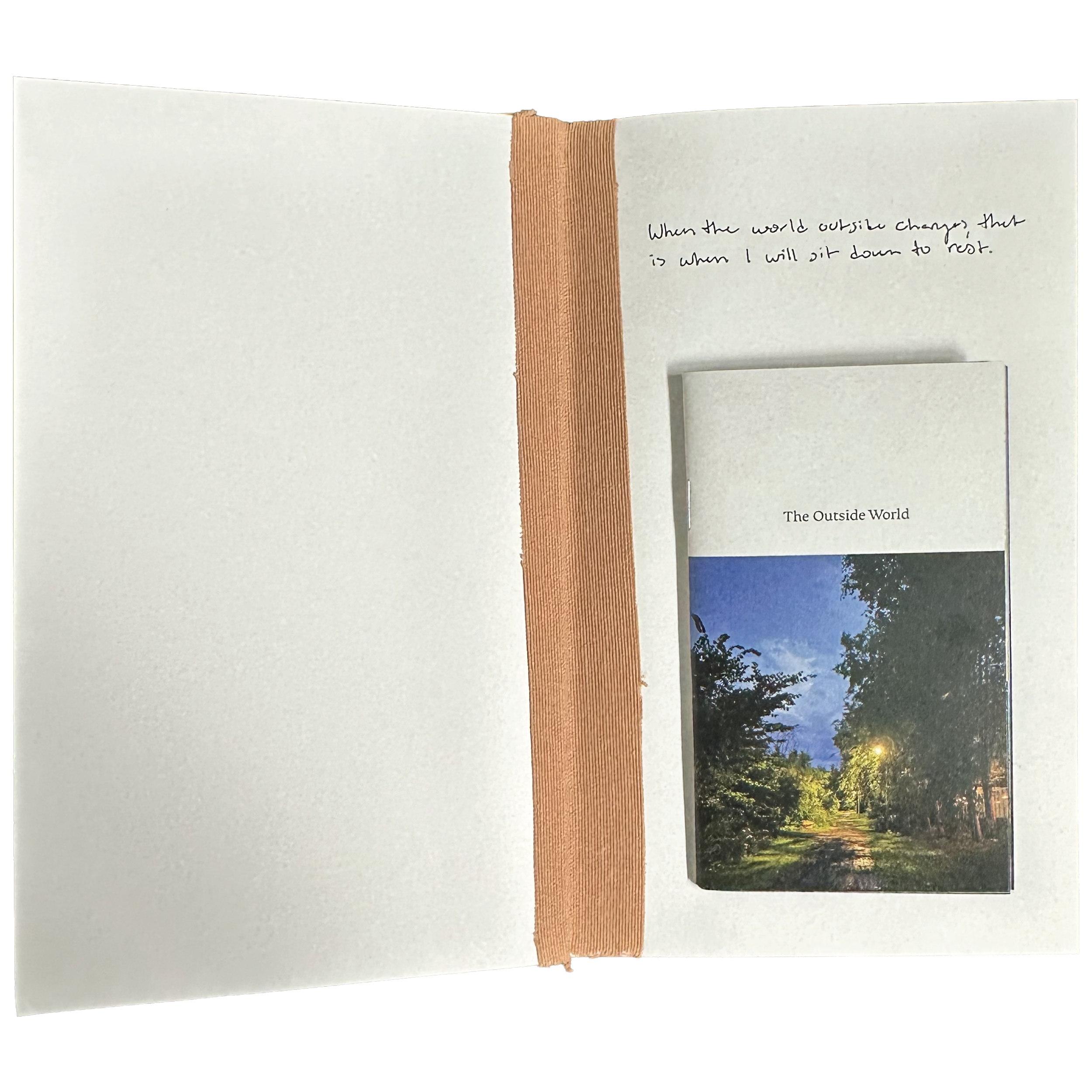
The final insert is a small book with photos of the “outside world”, starting with serene photos of the world, they slowly become overwhelmed with anti-trans rhetoric that has been shared online. This book is paired with the quote “When the outside world changes, that is when I will sit down to rest”.
Conclusion
My goal of designing with transgender people, for the transgender gaze, was extremely important. I understand what it feels like to recognize that the world is not designed for you, that trans people have to fight for space to be made for them, that is why this thesis and these books are designed to speak directly to the community. My research question, “How can book design highlight commonalities within the broader transgender community and link disparate individuals through shared experience?”strives to connect trans people, to validate their transness and their experiences, and to facilitate trans kinship through the trans reader interacting with the participants book. By conducting these interviews, and establishing shared experiences and connectedness within the collective, I was able to represent these experiences, bringing forward everyday trans individuals to form closer bonds “making visible that which had been ignored” (Hill 2007, p3). These narratives being represented “may actually lead to new ways of living one’s life” (Hill 2007, p3) when trans people are able to recognize their own narratives (in which they may feel alone in experiencing) portrayed through design. Therefore, these books are a purposefully designed space for trans people. They are intended to be gazed at, to conjure feelings of connectedness and validation, and to speak directly to a trans audience. Aspects of the books such as the trans tape binding, the rotating covers, and the poetry featured, all contribute to designing for a trans audience. These design elements act as signals or trans markers that a cisgendered audience may not detect.
If there is one thing I would like cisgendered people to gather from this project, it is to fight for your trans population. Uplift their voices, support them, listen and learn from them. To my trans family, I hope this project allows for you to see your community and know that your community sees you. Lean on them for support, guidance, and kinship.